Open Dashboard from the sidebar for an overview of the selected workspace. Its activity charts and shortcuts help you find recent traffic, errors and workflows. The monthly allowance panel covers your whole organization, including its other workspaces.
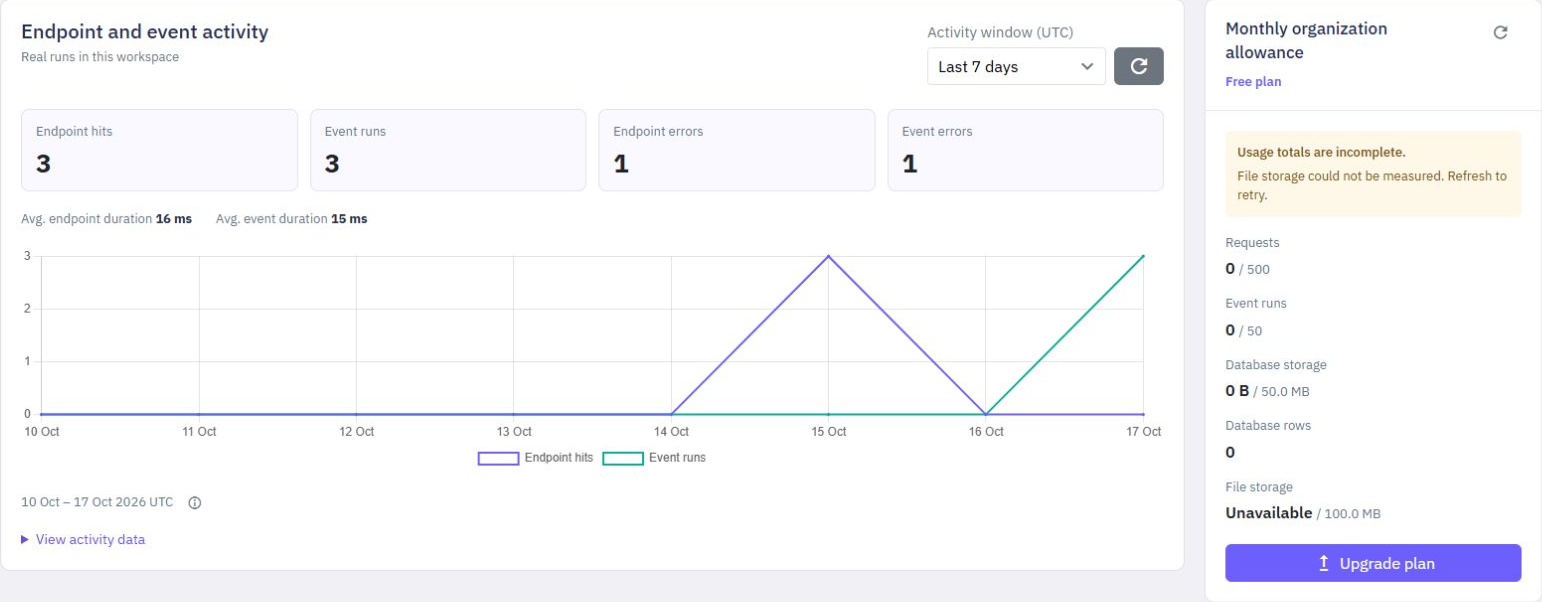
Endpoint and event activity shows recorded real endpoint hits and event runs for the selected workspace. Tests are excluded. The cards show each workflow type's calls and errors, with average recorded durations below them.
Confirmed requests to paths with no matching endpoint are excluded from endpoint activity. They remain in request history. An endpoint intentionally returning 404 is still a real endpoint call and is included.
Choose Activity window (UTC) to view the last 24 hours, 7 days or 30 days. The chart compares endpoint and event activity over time. Empty intervals show zero; if there are no recorded calls, the page says so. Open View activity data for the same timeline as a table.
The date range below the chart uses UTC. Use the information button beside it for details about scope and retention. The start is included and the end is exclusive. The first and last chart buckets may cover only part of an hour or day. Activity recordings are retained for 30 days and can be incomplete; these figures are not a lifetime traffic total or a billing report.
Use Refresh workspace activity to reload this section. A failure shows a retry action rather than presenting unavailable data as zero.
Monthly organization allowance shows the current plan and its organization-wide usage: requests, event runs, database storage, database rows where applicable, and file storage.
Changing the activity chart's dates does not change this monthly allowance period. Its scope and calculation differ from the retained workspace activity above it. Usage can be cached for up to 60 seconds; use Refresh plan usage to request an update.
Confirmed unmatched requests are also excluded from applicable request-usage totals and warning measurements. For older request logs, Twidget excludes them only when matching history confirms that no endpoint was found. Records without enough information remain included.
If some usage information is unavailable, the panel keeps its warning visible. File storage can show Unavailable instead of an invented zero. Review incomplete totals before relying on them for capacity decisions.
Use Logs & insights to investigate recorded calls and errors, or Background jobs to review queued and completed jobs. The API Endpoints and Database Tables previews use full-width rows matching their main pages. Select a row to open its editor, or its section heading to open the full list. Empty lists offer a create action. The learning links below these lists open videos and documentation, or restart the guided tutorial.
On wide screens, the monthly allowance sits beside activity in a readable panel. On smaller screens it moves below the chart, with usage values arranged to fit. Cards and controls wrap to the available width. Chart data tables scroll horizontally when needed. If you switch workspace, the dashboard reloads for that workspace and discards results from the previous selection.
Admin AI usage
Administrators can open AI Usage in the admin navigation to inspect platform-funded assistant activity across organizations. This page is separate from the customer's AI balance view and does not change billing or any plan benefits. Find activity. 1. Open AI Usage. OpenAI is selected initially. 2. C...
Admin Inbox
The Inbox brings website contact messages and messages sent through the platform's help forms into one place. It is available to Twidget administrators. The existing Emails page still manages templates and bulk email. Find a conversation. Open Inbox in the admin navigation. Filter by source or Open/...
Workspace Basics
In Twidget, a workspace serves as a dedicated environment for creating resources that contribute to an API's development. An organization can have multiple workspaces, each capable of creating a single API. Within a workspace, you can create the following resources: - [Endpoints](/docs/api/endpoint-...
Find accounts as an administrator
Open Users from the administrator navigation. Search by name, email, user ID, organization ID or workspace ID, then choose Search. Choose Clear to return to all accounts. An organization or workspace ID finds accounts linked to that organization, including its owner, members and administrators who a...
AI assistance
The former AI generation entry point is now part of Twidget Assistant: one task-based conversation for help, planning and reviewed resource proposals, including native page drafts. Open Assistant in the workspace sidebar or use the small Twidget Assistant helper. In Auto, discuss your goal and answe...